
2026’s ICC Triple Header: Pakistan’s Chance To Turn Promise Into Performance
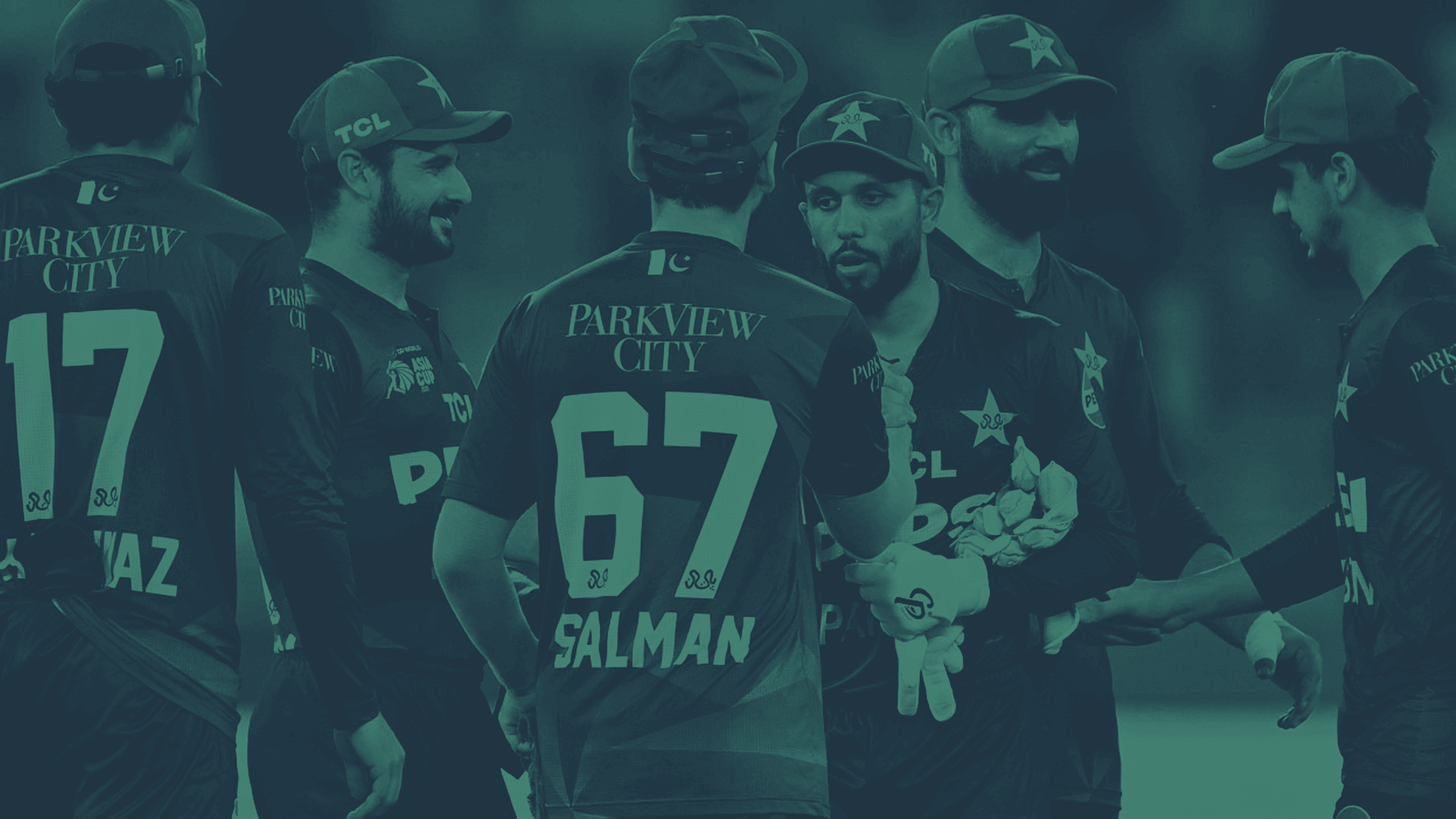
As the game resets for 2026, Pakistan are staring at a calendar that doesn’t come around often: three ICC Major Events in one year, each demanding a different kind of readiness – the youth pipeline, the men’s T20 engine room, and the women’s programme. It begins with Farhan Yousaf’s U19s at the ICC U19 Men’s Cricket World Cup in Zimbabwe and Namibia (15 January–6 February), flows straight into the ICC Men’s T20 World Cup in India and Sri Lanka (7 February–8 March), and then shifts into an English summer for the ICC Women’s T20 World Cup in England and Wales (12 June–5 July).
The last time Pakistan navigated a similarly stacked ICC year was in 2022, and the outcomes provided a clear snapshot of the country’s range. The U19s finished fifth at the U19 World Cup, the women ended eighth at the Women’s ODI World Cup, and the men surged all the way to the T20 World Cup final.
That contrast matters as the reference point for 2026 – not because Pakistan needs “redeeming”, but because the challenge now is to raise the floor across all teams while still chasing the ceiling the men have already shown they can reach. Three tournaments, three windows, three separate report cards — and, if handled well, one connected story of progress rather than three isolated verdicts.
And 2026 isn’t only a white-ball year. Running in parallel is the World Test Championship (2025–27), a cycle Pakistan badly needs to treat as more than background noise. The previous three WTC campaigns have been difficult: sixth (2019–21), seventh (2021–23) and ninth (2023–25).
According to the Future Tours Programme, Pakistan’s 2026 red-ball workload includes two Tests in Bangladesh, two in the West Indies, three in England (19 August–13 September), and two home Tests against Sri Lanka in November. Even in a year dominated by global tournaments, the standards that travel – fitness, discipline, role clarity, depth – tend to decide how teams hold up when the spotlight is harshest.
If Pakistan are looking for the clearest route to an early statement, it begins with the U19 World Cup – and not only because of history. Pakistan remains the only team to have won back-to-back U19 World Cups, achieving this feat in 2004 and 2006. Add the confidence of a convincing ACC U19 Asia Cup title in Dubai recently, and the presence of Sarfaraz Ahmed – a rare two-time ICC Event-winning captain – as manager/mentor, and it’s easy to see why belief is rising.
For Pakistan, this tournament isn’t just a trophy chase; it’s the most honest audit of whether the pipeline is producing players ready for the next level – and whether the next wave can carry expectation without being consumed by it.
The men’s T20 set-up, meanwhile, looks steadier than it did in the build-up to 2024, when uncertainty lingered around leadership, combinations and direction. Salman Ali Agha has been handed the leadership, with Mike Hesson in the coaching role, and there are signs of a clearer structure forming.
Shadab Khan’s return to fitness strengthens the all-round balance, and Babar Azam’s recent involvement has inevitably revived the familiar debate about what Pakistan’s best XI should look like by the time the squad is finalised. One concern is Shaheen Shah Afridi’s fitness. He had to cut short his BBL stint, return home, and manage his injury with an eye on matches in Sri Lanka.
For the women, rebuilding can’t remain a permanent headline. The programme has been searching for continuity, and the fact that the PCB is still to name a full-time head coach only reinforces that sense of drift. The schedule – white-ball tours to South Africa, Zimbabwe and Ireland between February and the start of the ICC Women’s T20 World Cup, alongside a planned National Women’s T20 Tournament in late March – can either become a genuine runway or another stretch of cricket that ends with the team arriving at an ICC event without a defined identity.
If properly utilised, these fixtures can help Fatima Sana’s side settle roles, deepen the bench, and show measurable improvement from their eighth-place finish in 2022.
This is where administration and performance intersect, whether we like it or not.
In Pakistan, outcomes are rarely only about talent; they are also about selection philosophy, continuity of leadership, player management, and whether preparation is planned months out or assembled under pressure. The current PCB set-up – after hit-and-miss opening months – has projected authority and shown a willingness to take firm decisions, and it will want 2026 to validate that direction. It can strengthen both credibility and public trust by being more open about the thinking behind key calls. In a sport run on emotion as much as evidence, “what” decisions are rarely enough; fans also want the “why”.
Recent results underline why the stakes feel heavy. Pakistan’s men did not progress to the Super Eights at the Men’s T20 World Cup in 2024, and the Champions Trophy in 2025 ended without the home-soil run many hoped for. The women have had their own difficult stretch, winning just one match at the 2024 Women’s T20 World Cup and finishing winless at the 2025 50-over World Cup, with four losses and three no-results.
Administration and teams share that record. Which means administration and teams must share the response, too.
The onus now shifts to Pakistan’s three squads to convert potential into performance – because Pakistan cricket history, fairly or unfairly, tends to remember boards most warmly when ICC trophies are lifted under their watch.
Lt Gen Safdar Butt is tied to 1992, Naseem Ashraf to 2009, and Shaharyar M. Khan to 2004, 2006 and 2017. Yet Pakistan’s story is also shaped by the less-celebrated architects: Nur Khan’s push for professionalism, Arfi Ali Khan Abbasi’s role in holding the 1987 and 1996 World Cups in the region, Tauqir Zia’s infrastructure work and the National Cricket Academy, Najam Sethi’s launch of the PSL as a vehicle to bring international cricket back to Pakistan, and Ehsan Mani’s stewardship during the sport’s uninterrupted return — including a successful bid for the 2025 ICC Champions Trophy.
In 2026, Pakistan has something rare: three ICC stages in one year, spread across the pipeline and both senior set-ups. If planning is coherent and execution ruthless, the year can become a turning point – not because Pakistan promised, but because Pakistan delivered. Because in the end, cricket doesn’t archive intent. It archives scorecards. And 2026 will file Pakistan under progress – or under another year of what-ifs.

GRC Staff
Lorem ipsum dolor sit amet, conse ctetuer adipiscing elit, sed diam nonum nibhie. Aenean sollici tudin, lorem auci elit consequat ipsutis sem niuis sed odio sit amet nibh vulputate cursus.

Leave a Reply