

Revolving Door: How Pakistan Lost The Shape of Their Test Side
In September 2016, Misbah-ul-Haq stood at the National Cricket Academy in Lahore and received the ICC Test Championship mace from ICC chief executive David Richardson, after Pakistan rose to No. 1 in the Test rankings for the first time since the current system began in 2003. A decade later, they are ninth and last in the ICC World Test Championship.
The numbers are stark. Pakistan have played nine Tests this cycle, winning two and losing seven. Slow over-rate penalties of 19 points (eight for the first Test against Bangladesh, 11 for the third Test against England) leave them with five points, or 4.63 percent of the points contested.
Australia lead on 75 percent, and even West Indies, the other once-feared, crowd-pulling side, stand on 20.83. Pakistan finished ninth last cycle too, on 27.98 percent. This is a slide, not a stall.
The squads tell part of the story.
Across the six squads named this cycle, the selection committee of Aqib Javed, Misbah-ul-Haq, Sarfaraz Ahmed and Asad Shafiq, with Mike Hesson as co-opted member, has named 36 players. Only Babar Azam and Saud Shakeel appear in all six.
Of the 18 named for the South Africa series, three remain in the Sri Lanka squad. Twelve players were named once and never again, and 20 were named in two squads or fewer.
The turnover is steady. Between consecutive squads, Pakistan added five new names, then five, then one, then seven, then five.
Four wicketkeeper-batters (Mohammad Rizwan, Rohail Nazir, Mohammad Ghazi Ghori and Saad Baig) were named in six squads. In spin, Abrar Ahmed appeared once and Noman Ali twice. Sajid Khan, who featured in five squads and has 77 Test wickets, is out again.
It extends to the cap list.
Nine players have made their Test debuts this cycle: Asif Afridi (Rawalpindi), Abdullah Fazal and Azan Awais (Mirpur), Ali Usman (Tarouba), Awais Zafar and Ubaid Shah (Port of Spain), and Ghazi Ghori, Mohammad Imran and Razaullah, all three at Edgbaston. Four of the nine (Asif Afridi, Awais Zafar, Ubaid and Imran) are not in the squad for Sri Lanka.
Afridi took six for 79 on debut against South Africa and was not named for the next series.
Leadership has been as unsettled.
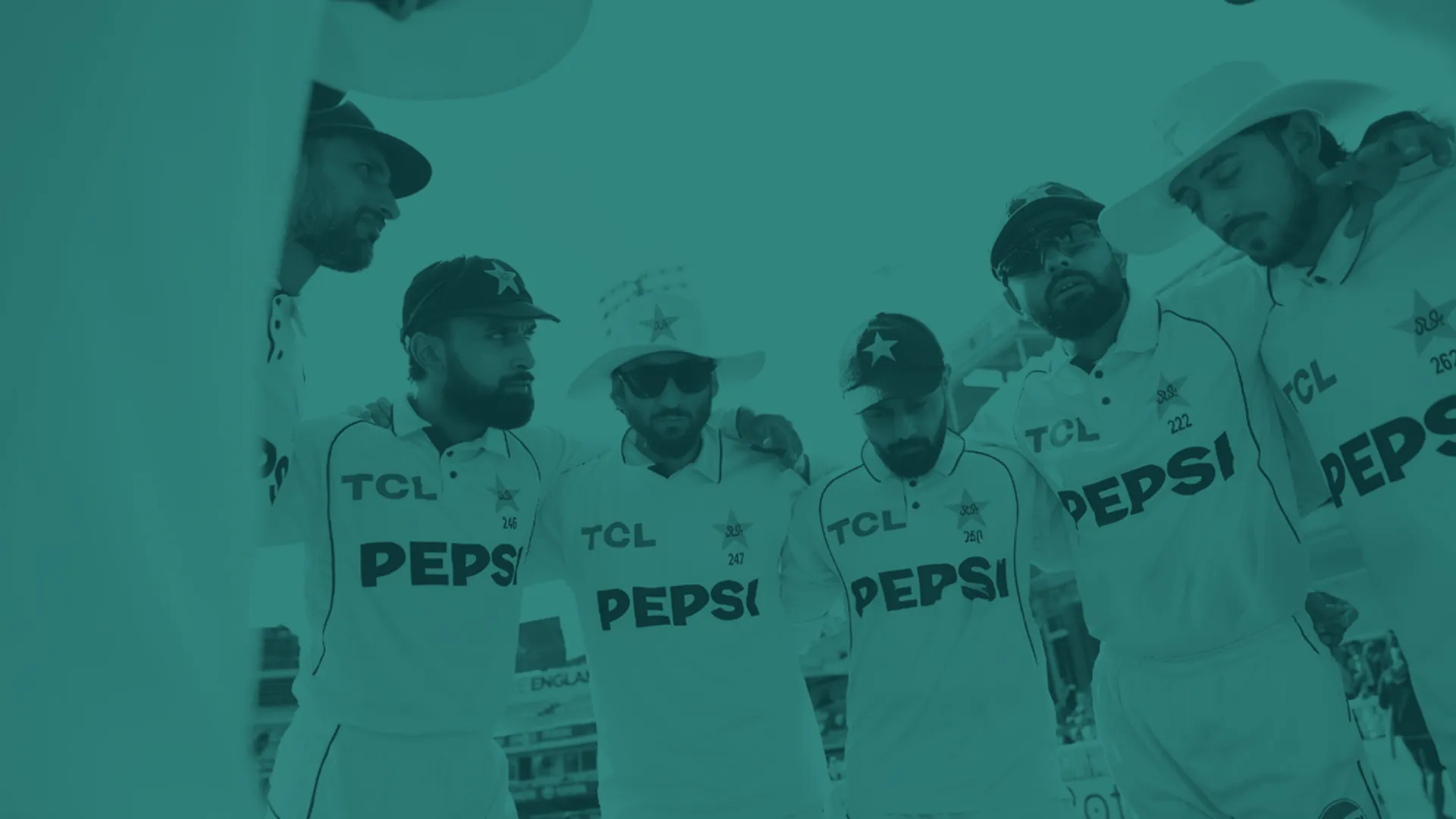
Three men have captained Pakistan in nine Tests: Shan Masood (four, against South Africa and Bangladesh), Babar Azam (four, in the West Indies and the last two Tests in England) and Salman Ali Agha (one, the first Test against England). Babar missed two Tests, one against Bangladesh and one in England. Salman captained that England Test, sat out the next and was released after Lord’s.
The individual numbers show who has been discarded.
Masood is the cycle’s leading run-scorer with 546 runs in 16 innings at 34.12, including a century in the West Indies and 95 at Edgbaston. He is not in the Sri Lanka squad, and the PCB has given no reason. A hamstring injury is assumed, and it kept him out of the last couple of President’s Trophy matches. Babar is second with 536 at 44.66, the only batter with more than two Tests to average over 40, though he has five fifties and no hundred.
Three of Pakistan’s five leading run-scorers (Masood, Rizwan with 409 and Abdullah Shafique with 374) are out of the squad.
Pakistan have scored only three centuries in nine Tests: Shafique’s 160 not out, Azan’s 103 and Masood’s 109. Two of those three centurions, Masood and Shafique, are out. Shafique made 84 runs in six innings in England after his 160 not out, so dropping him is defensible, but it follows a pattern of quick rises and falls.
The bowling follows the same pattern.
Mohammad Abbas, 37, leads the cycle with 31 wickets in six Tests at 21.06, with three five-wicket hauls. Behind him come Noman Ali, Khurram Shahzad and Sajid (18 each) and Mohammad Ali (17). Of those five leading wicket-takers, Abbas is the only one in the squad for Sri Lanka.
Noman took 14 wickets against South Africa and was not named for the West Indies. Sajid took eight wickets at 14.63 in his last Test, in Port of Spain, then went unused in England.
Shaheen Shah Afridi (10 wickets) and Hasan Ali (eight) played in the first two series and have not been selected since the Bangladesh Tests. The selectors have offered no explanation. Speculation has pointed to either poor form or workload management, but workload alone is hard to square with their absence from every squad since.
The Sri Lanka squad leaves out Masood, Sajid, Rizwan, Imam-ul-Haq and Mohammad Ali, again with no reasons given. It is assumed that Rizwan and Imam are facing inquiries, though both were allowed to play in the seventh and final round of the President’s Trophy. Neither the PCB nor the agency conducting the inquiries has commented.
The sharpest example came in England.
After the first two Tests were lost, the PCB released seven players and flew in seven replacements, five of them uncapped in Tests. Edgbaston featured three debutants, and Pakistan lost by eight wickets, completing a 3-0 defeat. Only six of the XI who played there are in the 14-man squad for Sri Lanka.
Selectors will say results forced their hand, and there is a fair case. The most settled group of the cycle, 16 of the 17 carried over from the West Indies series, lost the first two Tests in England. Stability of names alone is no cure.
But stability of names is not the same as a plan.
Test sides are built on defined roles, a known core and a pathway that tells a young player what he must do to keep his place. None of those is visible here. A batter who knows one failure may end his Test career cannot bat freely, and a bowler who does not know whether he is the new-ball option or the spare cannot prepare. Some of the discarded players were not failing.
Razaullah’s 81 and four wickets at Edgbaston suggest talent is not the shortage. Continuity is.
The cost goes beyond the table.
Fans connect with teams they recognize, and few of these squads would be recognizable from one series to the next. Pakistan’s Test identity, built in Misbah’s era on a patient, settled side, was part of its brand.
The two-Test series against Sri Lanka, in Rawalpindi from Nov. 9 and Lahore from Nov. 17, is the next test of the selectors’ thinking. If this squad is the start of a plan, it will look like one in 12 months. If it is simply the next draft, the table will say so.

GRC Staff
Lorem ipsum dolor sit amet, conse ctetuer adipiscing elit, sed diam nonum nibhie. Aenean sollici tudin, lorem auci elit consequat ipsutis sem niuis sed odio sit amet nibh vulputate cursus.

Leave a Reply