
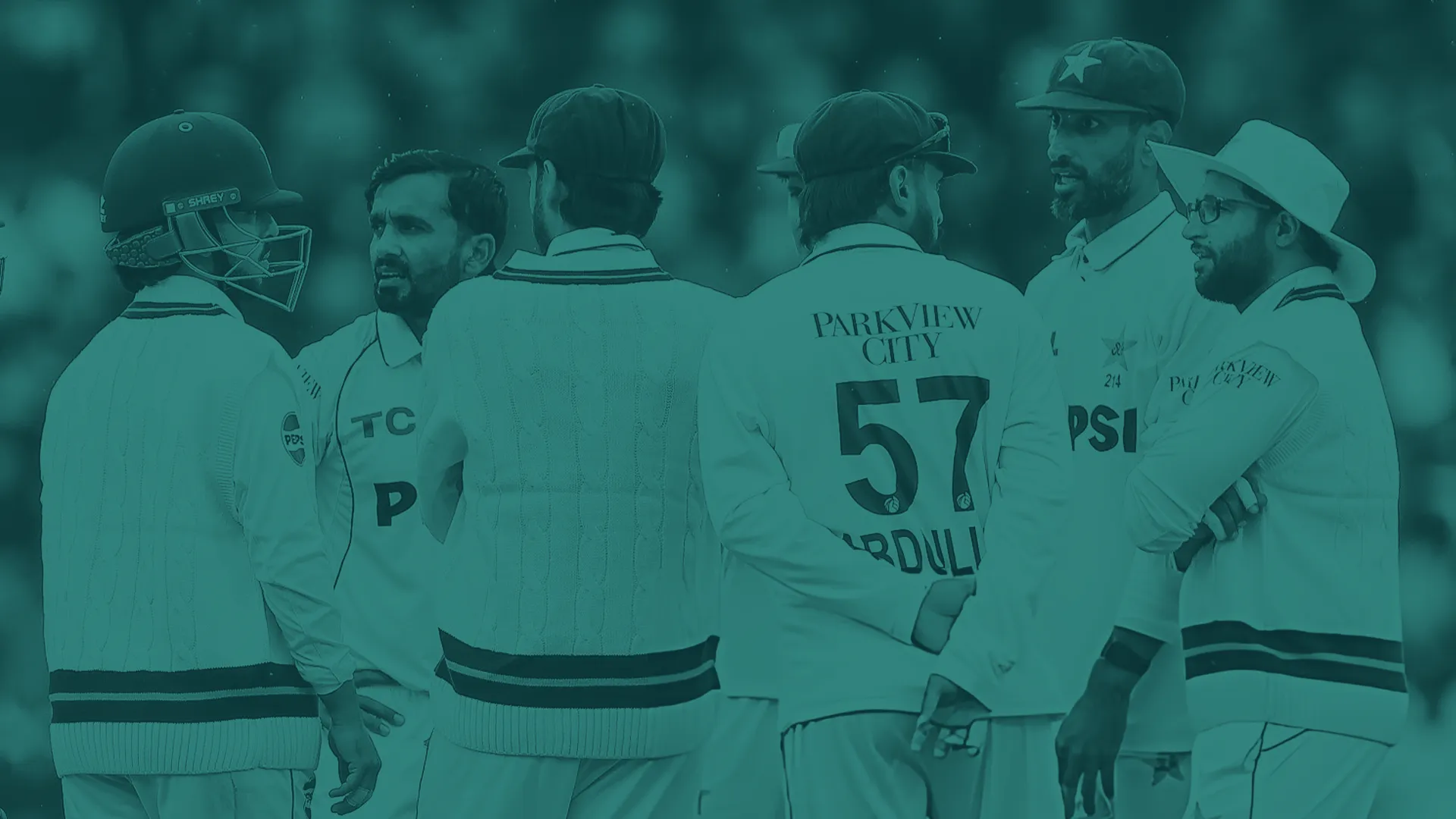
Time For Players To Stand Up For Babar, Pakistan
Pakistan have been given a second chance at Lord’s. After the humiliation of Headingley, where they were beaten by an innings and 103 runs inside three days, Pakistan need far more than a better performance in the second Test. They need a response that restores some credibility, keeps the three-Test series alive and reminds England — and themselves — that the team which collapsed in Leeds is not the sum of its abilities.
There is another incentive. Pakistan have not lost a Test at Lord’s since 2010.
Since that defeat, they have returned twice and won both times — by 75 runs in 2016 and by nine wickets in 2018. Before those victories came memorable successes in 1982, 1992 and 1996.
Five wins in their last nine Tests at the home of cricket is an extraordinary record. Few overseas grounds have been as kind to Pakistan, or as deeply woven into the fabric of their Test history.
Mohsin Khan scored a double-century and Mudassar Nazar took six wickets in the second innings in the famous 1982 victory. Wasim Akram produced an extraordinary all-round performance in 1992, including an unbeaten 45 when Pakistan were eight wickets down and still chasing 43 runs for victory. Inzamam-ul-Haq’s magnificent 148 followed in 1996. Then came Misbah-ul-Haq’s century in 2016, when he became the oldest Pakistan batter to score a Test hundred, and Mohammad Abbas’s eight-wicket match haul in 2018.
Lord’s has repeatedly produced Pakistan heroes. Now another generation has the opportunity to create its own.
The circumstances, however, could hardly be more difficult.
Pakistan arrived in London under enormous pressure after a performance at Headingley that exposed weaknesses in virtually every department. Their batting was repeatedly undone by movement, their bowling struggled to sustain pressure and their fielding lacked the sharpness required at this level.
England, by contrast, were ruthless. They batted with authority, bowled with discipline and intensity, and exploited Pakistan’s mistakes without mercy. Their innings and 103 runs victory was not an accident or a close contest that slipped away. England were substantially better for three days.
Pakistan must now prove that Headingley was an aberration rather than an accurate assessment of where they stand.
The return of Babar Azam provides an obvious source of encouragement.
Pakistan’s best batter missed the first Test after suffering a finger injury in the warm-up game before the series. But having completed a full batting session at Lord’s, Babar is expected to return for the second Test.
His presence changes the complexion of Pakistan’s batting. It brings experience. It brings quality. It gives the opposition another world-class batter to worry about. And, perhaps most importantly for a team that looked desperately short of confidence at Headingley, it gives the dressing room one of its most established figures back.
But there is a danger in allowing Babar’s return to become bigger than the Test itself.
Babar can strengthen Pakistan. He cannot rescue Pakistan.
That responsibility belongs to everyone. The other 10 players must stand up for their captain. If Babar is good enough to be trusted with leading Pakistan, the players around him must believe they are good enough to compete alongside him. They were not selected to make up the numbers. They were selected because they possess the talent, skill and potential to play international cricket.
Headingley does not change that. What it does change is the level of accountability. The players cannot erase what happened in Leeds. But they can answer it. And Lord’s gives them the perfect stage.
Confidence and self-belief will be crucial, but neither can be manufactured through motivational speeches. They will come from discipline, application and the willingness to withstand pressure when England inevitably create it.
For several players, this is more than another Test match. It is an opportunity to restore reputations.
Pakistan captain Babar Azam's pre-match press conference at Lord's | Pakistan vs England, 2nd Test#ENGvPAK | #PakistanCricket pic.twitter.com/L5DpeY86ND
— PCB Media (@TheRealPCBMedia) August 26, 2026
A strong performance at Lord’s will not erase the Headingley defeat, but it will demonstrate something far more valuable: character. It will show that Pakistan can absorb a heavy defeat without allowing it to become a defining one.
That is the challenge facing Babar, too. His return has been discussed almost as though his presence alone can transform Pakistan’s fortunes. It is an enormous burden to place on one player — particularly one returning from injury.
Yet Babar has an opportunity of his own.
He can answer his critics in the way great players traditionally do: with the bat. He can also make a statement with his captaincy.
His first major decision will be the composition of the side. Does he retain faith in the players who failed so badly at Headingley, or does he make changes and accept the risks that come with them?
There is no easy answer.
The batting looked vulnerable against the moving ball. The bowling attack failed to maintain pressure for sustained periods. Pakistan cannot afford another passive performance.
Selection, therefore, requires courage, not sentiment. But once the XI is chosen, the responsibility shifts to the players. They have to make the selection look right.
That is what Pakistan’s previous Lord’s victories tell us.
In 1992, Wasim Akram’s unbeaten 45 was decisive, but it came after Pakistan’s bowlers had given the side a chance and alongside Waqar Younis’s unbeaten 20. Wasim also took six wickets in the match.
In 2016, Misbah’s hundred was only one part of a collective victory. Asad Shafiq scored 73. Yasir Shah took 10 wickets. Sarfaraz Ahmed and others made important contributions in the second innings before the bowlers completed the job.
Individual brilliance mattered. But collective performance won the Tests. That is the lesson Pakistan must remember now. Not one superstar. A team.
Babar could score a hundred at Lord’s. He could produce the innings that reminds everyone why he is regarded as one of Pakistan’s finest batters.
It still would not guarantee victory.
Pakistan’s other batters must score. Their bowlers must take 20 wickets. Their fielders must hold their catches. Their captain must make good decisions. Their lower order must contribute when required.
Everyone has to play a part. That is how Test cricket works.
And that is why the narrative surrounding Babar’s return needs to be handled carefully.
If Pakistan win, it cannot simply be because Babar returned. If Pakistan lose, it cannot simply be because Babar failed. Either conclusion would allow the rest of the team to escape the responsibility that comes with playing international cricket.
Pakistan have history on their side at Lord’s. They have the venue. They have the opportunity. They now have Babar back. What they need is everyone else to stand up.
The Headingley defeat cannot be changed. But the response to it can define this team. Previous generations have already shown Pakistan how to win at Lord’s. Now this generation must show whether it has the character to follow them.
Do not wait for Babar to save Pakistan. Stand up, play for your captain — and play for Pakistan.

GRC Staff
Lorem ipsum dolor sit amet, conse ctetuer adipiscing elit, sed diam nonum nibhie. Aenean sollici tudin, lorem auci elit consequat ipsutis sem niuis sed odio sit amet nibh vulputate cursus.




Leave a Reply