
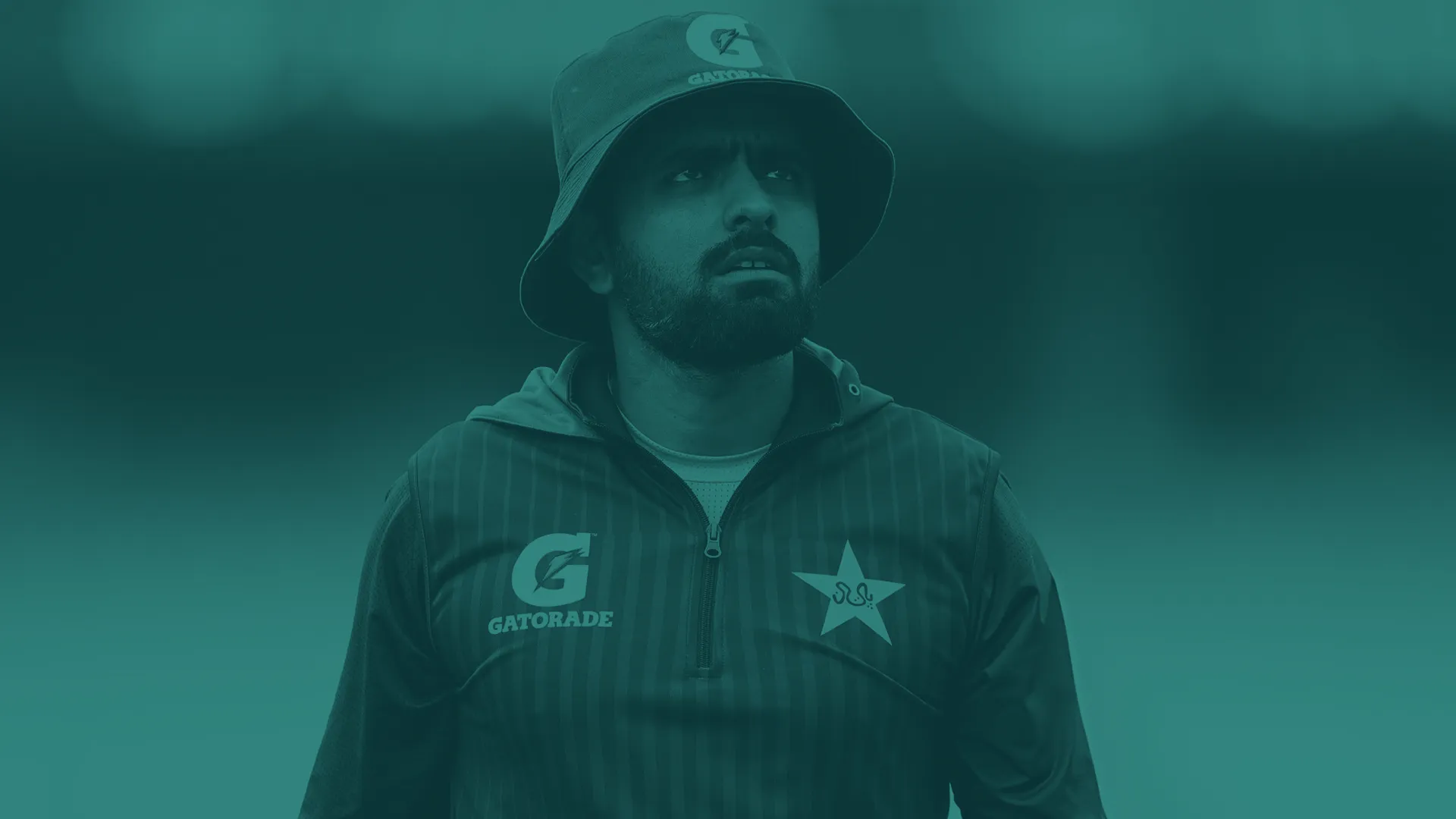
Stop Hiding Behind Babar Azam
Pakistan’s humiliation at Headingley has understandably triggered anger, frustration and, in some quarters, disbelief. A team with Pakistan’s cricketing pedigree, history and tradition was expected to show considerably more fight than it did in an innings and 103 runs defeat completed inside three days.
But amid the fallout, another narrative has quickly taken hold: Babar Azam must return at Lord’s. Of course, he should — if he is fit.
Babar remains Pakistan’s most accomplished active batter. His absence leaves a significant hole in the batting order. His experience matters. His presence gives the opposition something else to think about. England would certainly rather see him in the dressing room than in the stands.
But somewhere along the way, a perfectly reasonable argument has been distorted into something far more dangerous: the belief that Babar’s return can somehow rescue Pakistan from everything that was exposed at Headingley.
It cannot.
And the sooner Pakistan’s cricket managers, players, pundits and media accept that, the better. Because Pakistan are unquestionably a better team with Babar Azam in their XI. But that is not the same thing as saying they are incapable of competing without him.
If Pakistan cannot compete without one player, the problem is considerably bigger than the absence of that player.
Why, then, are the others there? That is the question that needs asking.
Babar’s fitness is an entirely separate matter. He injured his right hand while batting against a County Select XI in Canterbury and subsequently missed the Headingley Test. Reports of continued pain and swelling have made his availability for Lord’s dependent on his recovery.
Every Pakistan supporter wants to see him back. Every cricket follower would rather see one of the game’s leading batters playing at Lord’s.
But wanting Babar back is one thing. Expecting him to fix Pakistan is quite another.
And that expectation is not merely unrealistic. It is unfair to Babar and dangerous for Pakistan. Because it allows everyone else to hide.
The Pakistan Cricket Board cannot hide behind Babar. The team management cannot hide behind Babar. The players cannot hide behind Babar.
And Babar himself should not be turned into the convenient explanation for everything that goes wrong with Pakistan cricket.
This is not the first time he has been placed in that position.
Babar was reappointed Test captain after Shan Masood’s side had lost 12 of 16 Tests. He returned to leadership at a time when his own career appeared to be moving back towards something resembling the Babar Azam the cricket world had come to know.
He responded well in the West Indies, finishing the two-Test series as Pakistan’s leading run-scorer with 193 runs at 96.50 and sharing the Player of the Series award.
But one good series does not make one player responsible for the fortunes of an entire team.
And one disastrous Test does not suddenly make everyone else incapable of playing international cricket. That distinction matters. The players who took the field at Headingley were poor. There is no need to soften that assessment.
They looked short of confidence, application and, at times, the basic discipline required to compete in Test cricket. Pakistan’s batting collapsed. Their bowling failed to sustain pressure. Their fielding and decision-making did little to change the momentum of a match that England controlled almost from the outset.
They deserve criticism. But they also deserve something else: responsibility. Not responsibility transferred to Babar.
Responsibility placed where it belongs — on the players who were there, the management that prepared them and the system that selected and developed them. Instead, much of the conversation after Headingley has become about a man who did not even play.
That is convenient. It is also dangerous. Because once Babar becomes the explanation, everyone else gets an excuse. If Pakistan lose, his absence can be blamed.
If Pakistan win after he returns, his presence can be celebrated. And somewhere in between, the uncomfortable questions disappear.
Why did Pakistan’s batting collapse? Why were England allowed to seize control so quickly? Why did the players look so ill-equipped to respond when the game turned against them? Why did the team lack the collective resilience expected of an international side?
Those questions are far more important than whether one player can return in time for Lord’s.
Pakistan’s own history at Lord’s provides the answer to the Babar-as-Messiah theory.
In 1992, Pakistan chased 138 after England had been dismissed for 175. At 18 for three, and later 95 for eight, the match appeared to be slipping away.
Wasim Akram then produced one of the great match-winning performances of his career. But even Wasim did not win that Test alone. He made an unbeaten 45. Waqar Younis remained unbeaten on 20. Pakistan’s bowlers had already created the opportunity by dismissing England cheaply. Wasim himself had taken six wickets in the match.
Pakistan won by two wickets. It was extraordinary individual brilliance operating inside a collective performance.
Twenty-four years later, Pakistan again showed at Lord’s what a team performance looks like.
Misbah-ul-Haq made 114. Asad Shafiq scored 73. Yasir Shah took 10 wickets. Asad, Sarfaraz Ahmed and Yasir contributed valuable runs in the second innings before Pakistan’s bowling attack completed a 75-run victory.
There was a superstar performance.
There were supporting performances. There was pressure absorbed and pressure created. There were contributions from different players at different moments.
That is how Test matches are won. Not by a Messiah. By a team.
Babar could score a hundred at Lord’s. He could score a double-century. It would unquestionably improve Pakistan’s chances. But neither would guarantee victory. He cannot take 20 wickets. He cannot hold every catch. He cannot make every bowling decision. He cannot control the shot selection of the other batters. He cannot prepare the team. He cannot captain from the crease while simultaneously batting, bowling and fielding. And he certainly cannot manufacture collective courage.
That is why comparisons with other great players matter.
Sachin Tendulkar and Brian Lara were among the greatest batters cricket has produced. Yet neither could transform every team he played in into a winning machine.
Their greatness was real. Their teams’ limitations were real too. That is the lesson Pakistan should take from them.
A great player can change a game. A great player can win a match. A great player can turn a series. But no individual can permanently compensate for deficiencies across an entire Test side.
And that is precisely why the current Babar narrative is so dangerous. It creates the illusion of a simple solution to a complicated problem.
Bring Babar back. Problem solved.
But what happens if he returns before he is fully fit? What happens if he plays with an injured hand and struggles? What happens if Pakistan lose again?
The same people demanding his return today may ask tomorrow why he was selected.
That would be profoundly unfair to Babar.
He should play because he is fit and because Pakistan believe he gives them the best chance of winning — not because an entire cricket system has convinced itself that it cannot function without him.
There is a difference between being indispensable to a team’s quality and being indispensable to its existence.
Pakistan need Babar to contribute. They do not need Babar to carry them. And if Pakistan’s players need his presence to believe they belong at Test level, then the problem is no longer Babar’s absence.
It is the team’s mentality. That is the uncomfortable truth Headingley exposed.
The answer to a humiliating defeat cannot simply be the return of the player who was missing. The answer has to be a response from the players who were there.
Pakistan need their batters to survive difficult periods and convert starts. They need their bowlers to take 20 wickets. They need their fielders to hold the chances that come their way. They need their captain to make good decisions under pressure. They need their coaches to prepare the team properly.
And, above all, they need eleven players who believe they are capable of winning a Test match against England without waiting for someone else to save them.
If Babar is fit, he should play at Lord’s. Pakistan will be stronger for it. But his return should not become another escape route. Because the danger is not that Pakistan will lose without Babar.
The greater danger is that Pakistan will never learn why they are losing if Babar’s absence is always allowed to become the explanation.
Babar Azam is part of Pakistan’s solution. He is not Pakistan’s solution. Pakistan do not need a Messiah at Lord’s. They need a team willing to stand up. They need a management willing to make the right decisions. They need a cricket board willing to confront uncomfortable questions.
And they need every player to accept that wearing the Pakistan shirt comes with responsibility that cannot be outsourced to the country’s biggest star.
Stop hiding behind Babar Azam. Make the whole Pakistan team accountable.

GRC Staff
Lorem ipsum dolor sit amet, conse ctetuer adipiscing elit, sed diam nonum nibhie. Aenean sollici tudin, lorem auci elit consequat ipsutis sem niuis sed odio sit amet nibh vulputate cursus.





Leave a Reply