

Sir Garfield Sobers Dies At 89
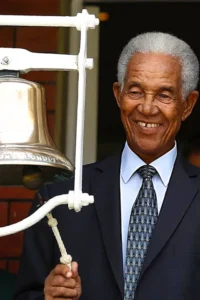
Sir Garfield Sobers, the West Indian all-rounder widely regarded as the most complete cricketer the game has produced, died on Friday at his home in Barbados. He was 89 — eleven days short of his 90th birthday. No cause of death has been given.
Across 93 Tests between 1954 and 1974, Sobers scored 8,032 runs at an average of 57.78, with 26 centuries and 30 fifties. He took 235 wickets bowling fast-medium, orthodox spin and wrist-spin — often within the same match — and held 109 catches, mostly at slip. He captained West Indies in 39 Tests, a record at the time.
Wisden named him one of the five greatest cricketers of the 20th century, alongside Don Bradman, Jack Hobbs, Viv Richards and Shane Warne; Bradman himself called Sobers the greatest all-rounder cricket had seen. Queen Elizabeth II knighted him in 1975, and the ICC inducted him into its Hall of Fame in 2009.
The record that began against Pakistan
Sobers’ defining innings came against Pakistan. Two Tests after Hanif Mohammad’s marathon 337 in Barbados, Sobers, aged 21, made an unbeaten 365 at Sabina Park in February 1958 — surpassing Len Hutton’s 364 to set a new Test record. It stood for 36 years, until fellow Barbadian Brian Lara passed it with 375 against England in 1994.
Sobers played eight Tests against Pakistan in all, across a five-match series at home in 1957-58 and a three-Test tour of Pakistan in 1959, scoring 984 runs. Fazal Mahmood dismissed him three times in five innings on that 1959 tour, where Sobers managed scores of 0 and 14 in Karachi, 29 and 45 in Dhaka, and 72 in Lahore in a series Pakistan won 2-1.
Across his career, Fazal accounted for Sobers five times in total, tying him with England’s John Snow and Tony Lock for the second-most dismissals of Sobers by any bowler – behind only Fred Trueman.
A career without equal
Sobers made his first-class debut for Barbados at 16 and his Test debut at 17. In 383 first-class matches for West Indies, Barbados, Nottinghamshire and South Australia, he scored 28,314 runs at 54.87 and took 1,043 wickets at 27.74. His international career largely predated one-day cricket; he played only one ODI, against England at Headingley in 1973.
In 1968, playing for Nottinghamshire against Glamorgan at St Helen’s in Swansea, Sobers became the first man to hit six sixes in a single over in first-class cricket, off the bowling of Malcolm Nash — a moment later replayed by Yuvraj Singh at international level and still among the sport’s most iconic passages of play.
Tributes from across the game
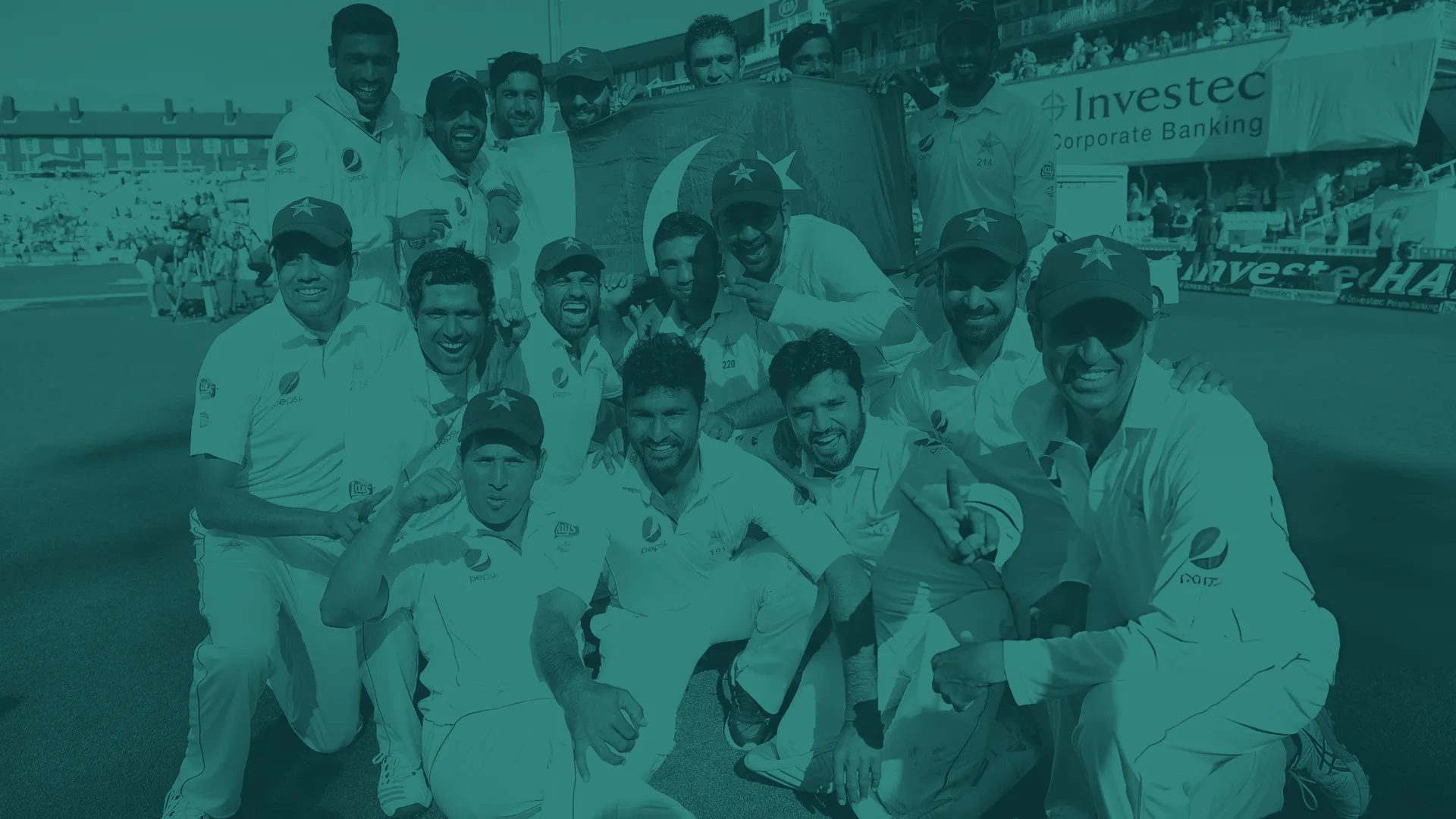
The Pakistan Cricket Board recalled the 1959 tour, saying Sobers’ brilliance had graced Pakistan’s shores and left a lasting impression on its cricket fraternity. Pakistan captain Babar Azam said Sobers “didn’t just play the game, he showed us what was possible in it,” adding his condolences to Sobers’ family and the people of the West Indies.
Cricket West Indies said a great innings had come to an end. CWI president Kishore Shallow called him the greatest cricketer the world has ever seen, saying his significance reached far beyond the boundary.
Sunil Gavaskar wrote that Sobers was “the greatest cricketer to walk the earth,” while Michael Holding said nobody could do what Sobers did. ICC chairman Jay Shah described him as a towering figure in world cricket.
Writing in The Telegraph, Geoff Boycott remembered Sobers walking out to bat with the confident, unhurried gait of a panther, needing no words to announce his presence. “Anyone who saw him in his pomp will have wonderful memories of a great batsman, the greatest all-rounder, an icon, a once-in-your-lifetime, exceptional cricketer.
“I just loved the way Garry walked out to bat. He was like a panther with a purposeful, loping and confident walk. He didn’t say anything. He did not need to. There was no ego. His walk let the opposition know he was there for business.”
Sobers is survived by his three children. He leaves behind a Test record against Pakistan that stood for 36 years, a captaincy mark that shaped West Indian cricket’s golden era, and a case — made by teammates, opponents and successors alike — as the finest all-round cricketer the game has known.

GRC Staff
Lorem ipsum dolor sit amet, conse ctetuer adipiscing elit, sed diam nonum nibhie. Aenean sollici tudin, lorem auci elit consequat ipsutis sem niuis sed odio sit amet nibh vulputate cursus.


Leave a Reply