
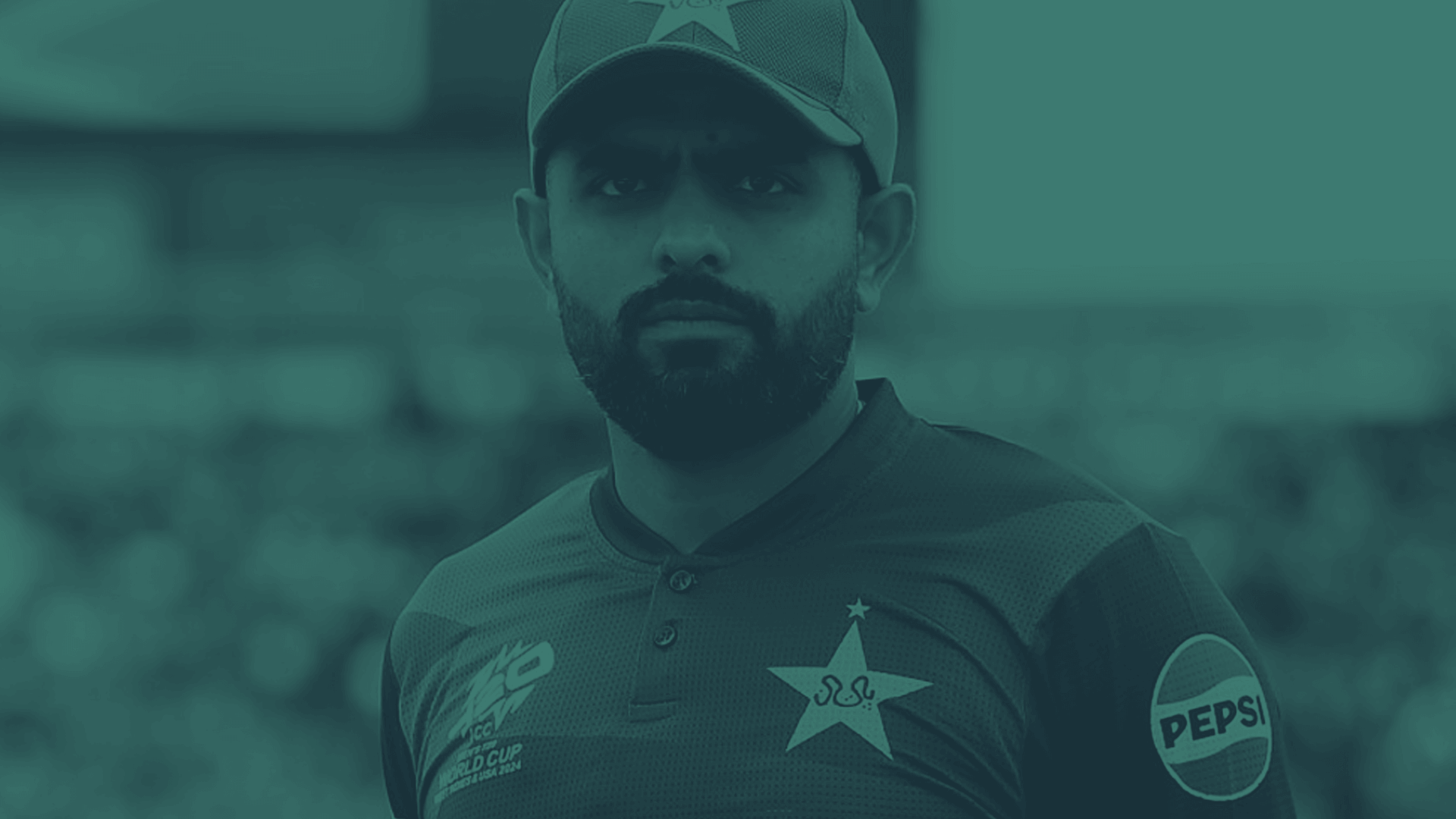
PAK V AUS T20Is Preview: Time To Leave Babar Azam Alone
LAHORE: Pakistan will take on Australia in the first of three T20Is at the Gaddafi Stadium on Thursday, even though their strategy around participation in next month’s ICC Men’s T20 World Cup 2026 remains unclear. Back-to-back T20Is will follow on Saturday and Sunday before Australia departs for Colombo.
Both sides have already named their World Cup squads and this series is, effectively, the final dress rehearsal – a last meaningful chance to sharpen roles, stress-test combinations and settle the best XI. Pakistan are in Group A along with India, Namibia, the Netherlands and the USA, while Australia are in Group B along with Ireland, Oman, Sri Lanka and Zimbabwe.
It is also a notable moment in the bilateral narrative: the upcoming series will be the first between the sides in Pakistan. Australia last visited in 2022 and played a lone T20I alongside three Tests and three ODIs. They won that T20I by three wickets despite Babar Azam’s 66.
Head-to-head, Australia lead Pakistan 14–13 with one no-result. Australia have won the last seven T20Is, while Pakistan’s last win came in Dubai in October 2018, when they won by 33 runs — powered by Babar Azam’s 50 and Shadab Khan’s three for 19. That statistic alone should underline the larger point: Pakistan do not need a saviour narrative. They need a collective performance that turns moments into momentum.
This time, Babar is again part of Pakistan’s T20I squad and their World Cup plans and, unsurprisingly, he remains the loudest headline in both new and traditional media. Clips of his batting – often paired with wildly contrasting commentary – are circulating relentlessly, with content creators turning selection and form into daily entertainment.
Scrutiny comes with stardom. But Pakistan cricket has reached the point where the obsession is no longer constructive. It is now time to leave Babar Azam alone – not as an excuse, not as a shield, but as a basic requirement for an elite athlete to function. He needs space to focus on process, rhythm and decision-making, rather than playing under a permanent microscope that amplifies every dot ball and every dismissal into a referendum on his career.
Elite athletes are, after all, human beings. Excessive attention and constant public judgement can become pressure that is neither necessary nor productive. Sport is full of examples of reputations shaped – and sometimes harmed – by narratives that grew larger than performance.
The more Pakistan’s public conversation becomes a daily trial of one player, the more the team loses sight of what wins tournaments: clarity, collective confidence and roles that hold under pressure.
If content creators and social media activists genuinely want to “help Pakistan cricket”, there is a better use of their attention in this series: analyse match-ups, highlight tactical priorities, and put the spotlight on the broader group that will actually decide Pakistan’s World Cup fate.
Because Pakistan’s World Cup story will not be written by one player alone. In fact, this series is an ideal stage for six players set to feature in their maiden T20 World Cup to grow into the noise and responsibility that comes with it: captain Salman Ali Agha, Faheem Ashraf, Khawaja Mohammad Nafay, Mohammad Salman Mirza, Sahibzada Farhan and Usman Khan.
If Pakistan want a serious campaign, the public conversation has to start treating these players as more than supporting cast.
From Pakistan’s perspective, the immediate value of the Australia series is not whether Babar “silences critics” in one innings. It is whether Pakistan arrive in Sri Lanka with settled roles. Who owns the powerplay intent? Who closes the middle overs without bleeding momentum? Which bowling combination can defend at the death? Where do Pakistan’s match-winners sit – and can they win games without needing everything to go perfectly?
Australia’s selection, meanwhile, underlines the nature of this tour: preparation with opportunity. Mitchell Marsh will captain a 17-player squad that does not include Nathan Ellis, Tim David, Josh Hazlewood, Glenn Maxwell and Pat Cummins – all members of the World Cup squad. That opens the door for several players to press claims or provide cover, including Sean Abbott, Mahli Beardman, Ben Dwarshuis, Jack Edwards, Mitch Owen, Josh Philippe and Matt Renshaw.
For Australia, this is not only about winning a series; it is about building depth and ensuring their World Cup squad has ready replacements who can step in without disrupting balance. For Pakistan, it is about building cohesion and confidence before tournament cricket compresses time and punishes uncertainty.
The cricket itself offers a few clear themes to watch.
First, the PowerPlay battle. Pakistan’s top order has talent and range, but intent and selection clarity matter as much as skill. Against Australia’s pace options, Pakistan will want to set patterns that can travel to World Cup conditions — not just start quickly, but start smart, with defined risks and defined gears.
Second, the middle overs. T20s are increasingly won in the “quiet” phase: how teams manufacture boundaries without reckless dismissals, and how they use spin and match-ups to choke momentum. Pakistan’s ability to control this period – with both bat and ball – is likely to be a truer indicator of readiness than any single individual score.
Third, the death overs. Tournament cricket has a habit of exposing uncertainty late in innings. Pakistan’s bowling depth, execution under pressure and clarity around death roles will be tested across three matches in quick succession. Australia, too, will be evaluating who they trust in the final four overs when the game becomes a contest of nerve.
Pakistan enter the series after a 1–1 result in their three-match series against Sri Lanka earlier this year. Australia arrive off their domestic T20 season, where Perth Scorchers defeated Sydney Sixers to win their sixth title – a reminder of the depth and competitiveness that sits behind Australia’s national set-up.
And so the series comes with two realities at once. It is a serious contest between second and sixth-ranked sides, and it is also a controlled environment for fine-tuning. Pakistan should treat it as a rehearsal with purpose – and the public should treat it as a team sport.
Leave Babar alone. Let him play. Let him work. Let him be part of a unit that is preparing for a World Cup. Then judge, if you must, when the tournament ends – not every day, not every clip, not every innings.
Squads:
Australia (17 players): Mitchell Marsh (captain), Sean Abbott, Xavier Bartlett, Mahli Beardman, Cooper Connolly, Ben Dwarshuis, Jack Edwards, Cameron Green, Travis Head, Josh Inglis, Matthew Kuhnemann, Mitch Owen, Josh Philippe, Matthew Renshaw, Matt Short, Marcus Stoinis, Adam Zampa
Pakistan (16 players): Salman Ali Agha (captain), Abrar Ahmed, Babar Azam, Faheem Ashraf, Fakhar Zaman, Khawaja Mohammad Nafay, Mohammad Nawaz, Mohammad Salman Mirza, Mohammad Wasim Junior, Naseem Shah, Sahibzada Farhan, Saim Ayub, Shaheen Shah Afridi, Shadab Khan, Usman Khan and Usman Tariq.

GRC Staff
Lorem ipsum dolor sit amet, conse ctetuer adipiscing elit, sed diam nonum nibhie. Aenean sollici tudin, lorem auci elit consequat ipsutis sem niuis sed odio sit amet nibh vulputate cursus.




Leave a Reply