

ICC & BCCI: From Governance To Strong-arm
If world cricket wants to understand how its credibility is being shredded, it should stop pretending the problem is team logistics and event scheduling. These are problems intelligent, experienced administrators are meant to solve. The real problem is the selective application of principle – and the quiet, consistent way the ICC has allowed the most powerful board to turn precedent into a weapon.
Start with two moments that are easy to forget precisely because they prove what good governance looks like.
In late January 2011, with the start of the ICC Cricket World Cup 2011 just 11 days away, Eden Gardens was deemed not ready. The ICC removed the 27 February India-England match from Kolkata to Bengaluru. The then BCCI president Shashank Manohar did not threaten, posture, or grandstand. He stated the obvious: it was an ICC tournament, and the ICC had the authority to decide. He also acknowledged that the BCCI had tried to help the local association, but the final call rested with the ICC.
Five years later, on 9 March 2016, the India-Pakistan fixture scheduled for 19 March was moved from Dharamsala to Kolkata 10 days before the high-profile clash in the ICC Men’s T20 World Cup 2016. Again, the administrators did what administrators are supposed to do: they worked the problem, found a solution, and the competition proceeded.
These are not ancient stories. They are proof of concept: tournament cricket can absorb late venue changes; stakeholders can be managed; security, logistics and scheduling can be reworked – if the priority is the event, not political theatre.
Now fast-forward to January 2026, and watch the same system behave as if it has suddenly become incapable of flexibility.
On 3 January 2026, the BCCI Secretary Devajit Saikia instructed Kolkata Knight Riders to release Bangladesh’s Mustafizur Rahman from their squad. The episode was widely reported as being linked to heightened India–Bangladesh tensions following violent incidents and protests.
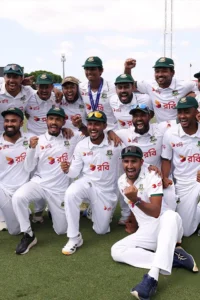
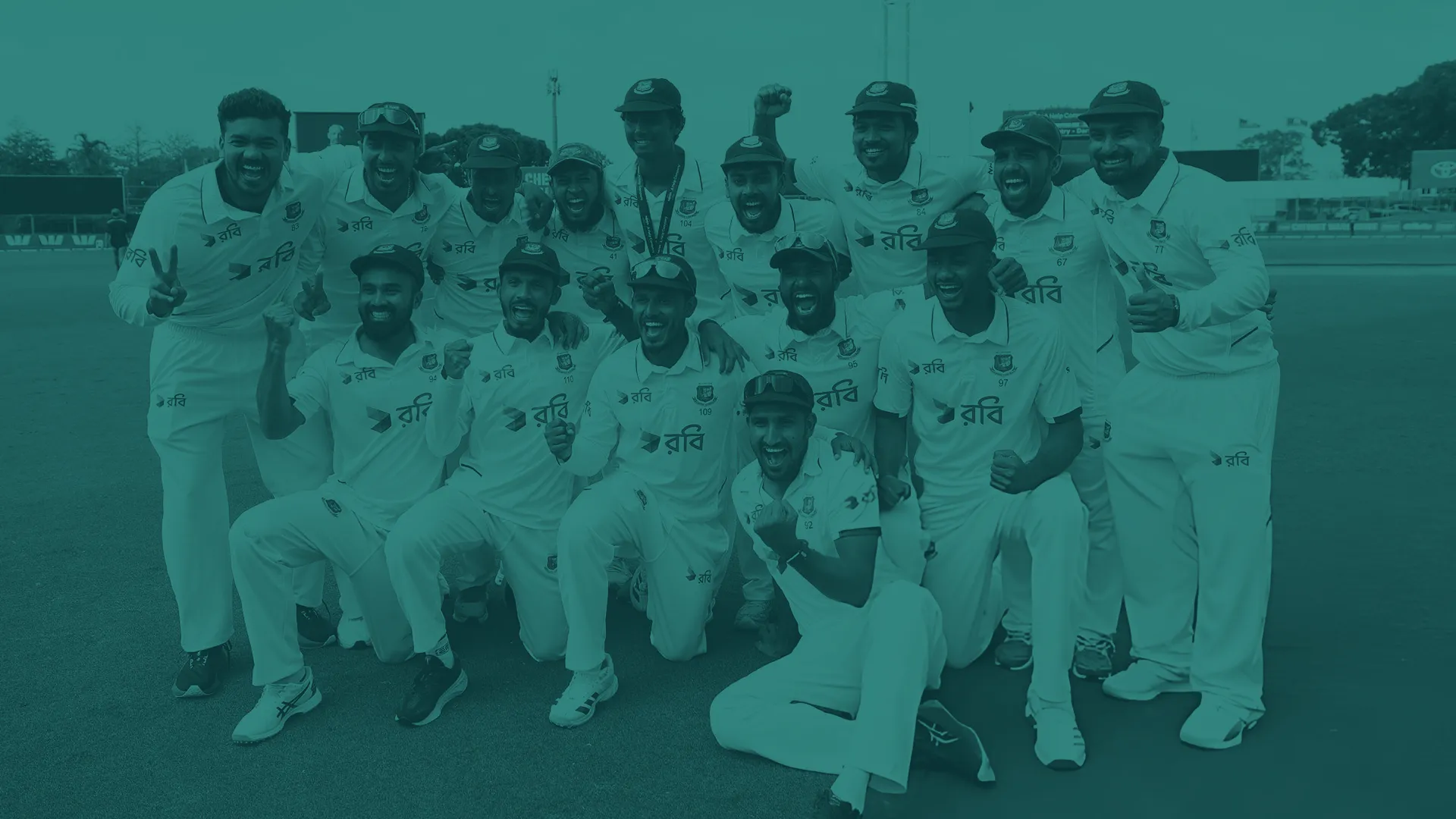
That episode mattered because it became part of a wider political and security argument around Bangladesh’s participation in the ICC Men’s T20 World Cup 2026 (co-hosted by India and Sri Lanka). Bangladesh asked for a schedule adjustment that would move their matches away from India.
The ICC refused. In its own wording, “in the absence of any independent security findings that materially compromise the safety of the Bangladesh team,” it was unable to relocate fixtures, warning about precedent, neutrality, fairness, and integrity.
Within days, the dispute escalated into a governance crisis. Bangladesh was replaced by Scotland, with the ICC stating that it had rejected Bangladesh’s request after independent assessments found no “credible or verifiable” threat, and that Bangladesh refused to participate under the published schedule.
Here is the credibility problem: the ICC’s stated standard in January 2026 collided head-on with what it had already normalised for India.
And the contradiction sits in the ICC’s own language. The last paragraph of the ICC’s 21 January media release pledged that it would act “in good faith”, uphold “consistent standards”, and “safeguard the collective interests of the global game.” Those are not decorative words; they are measurable commitments. And by the ICC’s own record, they do not hold.
In 2011, the ICC moved an India–England World Cup match from Kolkata to Bengaluru 27 days out. In 2016, it moved India–Pakistan from Dharamsala to Kolkata 10 days out. In both cases, the ICC treated logistics as solvable because protecting the tournament came first. Yet in 2026, when Bangladesh sought an adjustment well in advance, the ICC invoked logistics and “precedent” as immovable barriers. That is not consistent standards – it is consistency only when it suits.
The point is not that every request is identical; it is that the ICC’s flexibility is not a logistical constraint – it is a governance choice.
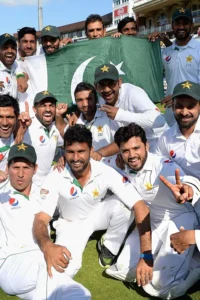
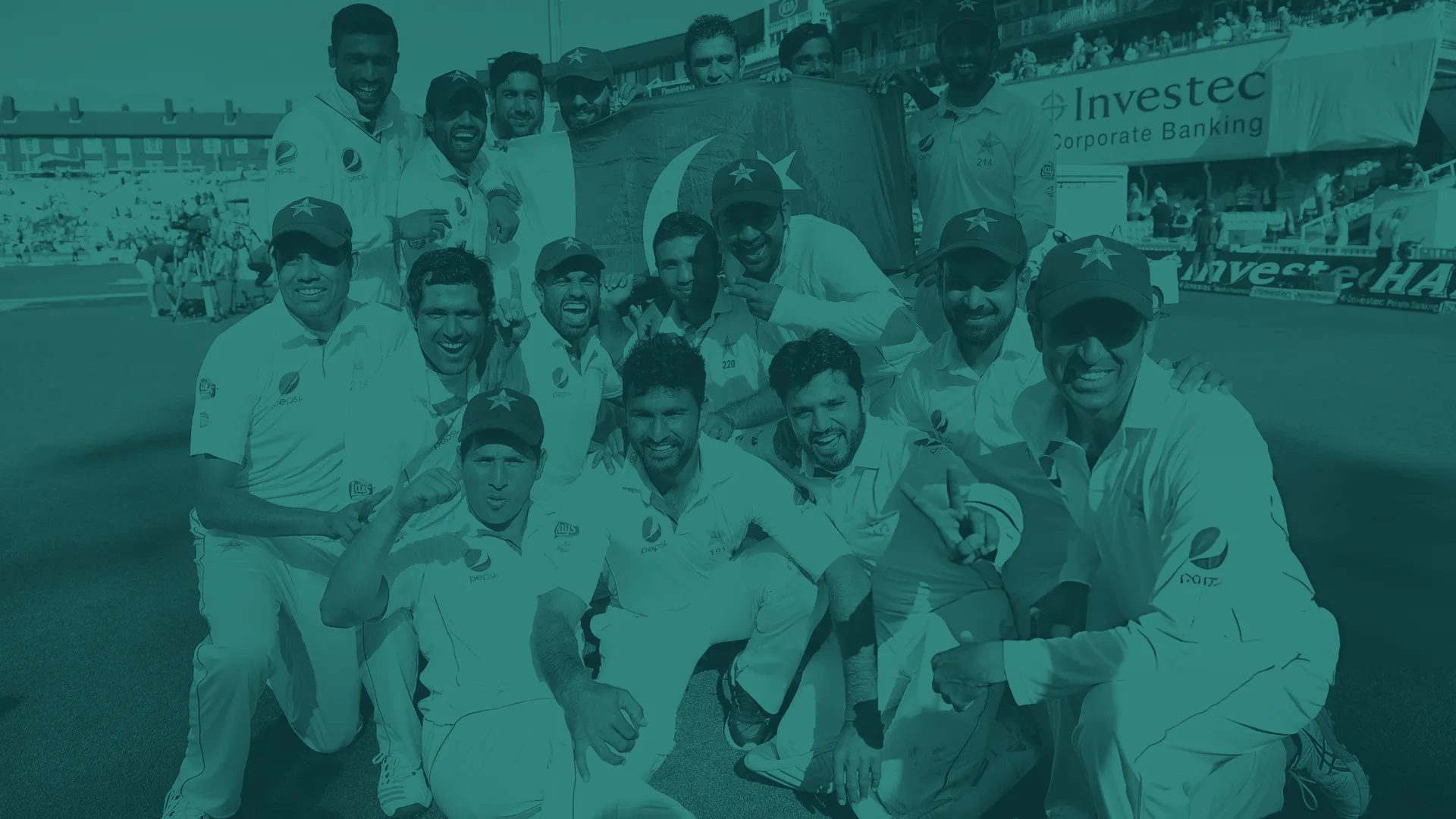
Because the ICC’s “precedent” argument is not theoretical – it was built in plain sight during the Champions Trophy 2025.
India refused to travel to Pakistan and played all its matches in Dubai, with the position repeatedly framed as being aligned with government advice. The consequence was structural, not minor: one side played an entire tournament from one base while others moved between countries and venues – and the ICC absorbed it.
Pakistan’s hosting rights became partial hosting. Even the optics of hosting were contested. A widely reported flashpoint came at the final presentation ceremony, where Pakistan – the tournament host – had no representative on stage, prompting public criticism and the PCB seeking explanations.
So, when the ICC frames Bangladesh’s request as something that would threaten neutrality, fairness, or integrity, the obvious response is: whose integrity was protected when India refused to travel for an ICC event – and the tournament was reshaped around it?
And if the answer is “that was different,” then cricket deserves an honest explanation of how it was different – in published criteria, not private comfort.
Because “security” has become a convenient instrument: invoked by the powerful as an absolute veto, then dismissed for the less powerful as insufficient.
Then, in September 2025, the Asia Cup supplied the clearest example of politics being carried onto the field – not through whispers or inference, but through admissions.
India’s players declined to exchange handshakes with Pakistan, and the rationale was not left to speculation. India captain Suryakumar Yadav said the decision was taken as a “call” within the camp, and added that the team was “aligned with the government and the BCCI” – a direct acknowledgment that the posture was shaped by the board and the state, not merely by match-day emotion.
What followed was even more damaging, because it dragged the sport’s most public ritual into a calculated snub.
After winning the final, India refused to receive the Asia Cup trophy from the ACC President. BCCI secretary Devajit Saikia explained the decision without ambiguity: “We have decided not to take the Asia Cup trophy from the ACC chairman, who happens to be one of the main [political] leaders of Pakistan.”
It was not an impulsive gesture; it was a premeditated stance, designed to turn the presentation podium into a political statement.
This is where the governance failure becomes impossible to ignore. The issue is not whether teams feel political pressure – they do. The issue is what the sport’s regulator does when that pressure is openly confirmed, then expressed through conduct that places the game in disrepute.
And what did the ICC do – before, during, or after an Asia Cup where sportsmanship was publicly discarded and the trophy ceremony was deliberately politicised?
Nothing meaningful. No visible deterrence. No enforcement standard. No governance spine.
It is in that vacuum that the most cutting critique has flourished – and it has come from within cricket’s most credible press corps.
India’s respected and award-winning journalist Sharda Ugra put it most bluntly: the ICC no longer functions as an independent body and has effectively become the Dubai office of the BCCI.
Her argument is not about personalities; it is about power – and how the imbalance has undermined the ICC’s credibility and ability to resolve disputes.
When Ugra says “Dubai office of the BCCI,” she is also pointing to the ICC’s present management set-up, which comprises Jay Shah (Chairman), Sanjog Gupta (Chief Executive), Ankur Khanna (Chief Financial Officer), Anurag Dahiya (Chief Commercial Officer) and Gaurav Saxena (General Manager – Events & Communications).
The argument is not that nationality automatically equals bias; it is that in a system already accused of selective enforcement, this concentration of influence intensifies the optics problem the ICC can no longer ignore.
You can disagree with Ugra’s phrasing. You can even call it provocative. But you cannot deny why it resonates: because the ICC’s pattern of enforcement looks less like neutral governance and more like adaptive justification.
When India refuses to travel, the system bends and calls it pragmatism. When Bangladesh seeks an adjustment, the system stiffens and calls it principle. When conduct and ceremony are politicised in plain view, the system goes quiet and calls it “outside our remit.”
This is not leadership. This is leverage.
World cricket does not need sanctimony. It needs consistency. If the ICC wants to restore credibility, it must do at least three things.
First, publish a clear, consistent decision framework for venue relocation and participation disputes – and apply it uniformly.
Second, stop hiding behind “precedent” after creating precedent whenever the most powerful board demands it.
Third, protect the game’s public rituals – handshakes, ceremonies, basic sportsmanship – by treating reputational harm as governance harm, not as a PR inconvenience.
The sport has survived wars, boycotts, and political upheaval because administrators once understood a basic truth: the game is bigger than them.
Cricket’s crisis today is not that administrators cannot solve problems. It is that too many of them have stopped trying – unless the request comes from the board that pays the bills.

GRC Staff
Lorem ipsum dolor sit amet, conse ctetuer adipiscing elit, sed diam nonum nibhie. Aenean sollici tudin, lorem auci elit consequat ipsutis sem niuis sed odio sit amet nibh vulputate cursus.


Leave a Reply