

PSL 11 Signals Power Shift And Record Chase
The 11th PSL season is a genuine structural break from the first decade: the league has expanded to eight teams, switched from a draft to a player auction system, and locked in record-setting commercial agreements with broadcast, live streaming, and brand partnership rights partners.
On-field, the headline is depth: the auction has redistributed star power and imported high-end overseas experience – notably a strong Australian contingent – while also demanding an under-23 PSL debutant in each playing XI – a push towards domestic pathway acceleration.
Operationally, the season’s biggest variable is the late venue shift. The tournament was originally announced as a 44-match, 39-day event across six venues (including first-time PSL hosts in Faisalabad and Peshawar). However, days later, it moved to a revised plan: matches are set to be staged in Lahore and Karachi only, with no spectators initially and the opening ceremony cancelled.
Historically, Lahore (177) and Karachi (173) have provided similar average scores batting first in PSL matches, whereas bowlers will not mourn the loss of games in Rawalpindi, where the average score batting first has been 202.
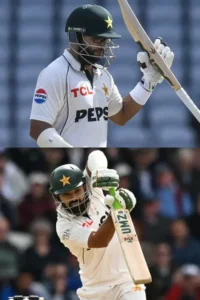
Babar Azam of Peshawar Zalmi is the leading scorer in the PSL’s history with 3,792 runs, with his 38 scores of at least fifty also a record, and it isn’t even close! If he maintains anything like his career average of 44.61, midway through the season, he should become the first player to reach 4,000 runs in the tournament.
Lahore Qalanders’ Fakhar Zaman is the batter closest to Babar in terms of career runs, but he is very much hoping to hold onto second place, rather than threaten the top spot for the time being. His 439 runs in last year’s competition propelled him to 2,964 in his career, just 36 runs short of a landmark of his own.
Rawalpindiz captain Mohammad Rizwan will also hope to reach 3,000 career runs as he currently lies 229 runs short. Riley Rossouw of Quetta Gladiators – about to start his tenth PSL season – needs 213 runs to become the first overseas player to score 2,500 runs in the competition.
It is a much closer race with the ball, with Hasan Ali currently enjoying a 125–122 lead at the top of the career wicket-taking list over last year’s leading wicket-taker Shaheen Shah Afridi, with Shadab Khan and the retired Wahab Riaz the only other bowlers to have reached three figures.
Last year, Shaheen not only led his team to the title but became the first player in PSL history to captain a side while being the youngest player.
If conditions this season reward new-ball swing and high-impact death overs, the “leading wicket-taker” title could become a live subplot rather than just a historical footnote.
Keep an eye on Islamabad United’s Faheem Ashraf, as he needs just 34 runs and five wickets to become just the second player after Shadab to achieve the 1,000 run / 100 wicket double in the PSL.
Two other leading performers from the 2025 PSL have gone on to enjoy successful years in the international arena and will be hoping to continue their strong showings in this year’s edition of the tournament.
Sahibzada Farhan ended as the leading run-scorer last year with 449 runs and repeated that feat in the recently concluded ICC Men’s T20 WC, ending with 383 runs, and is ranked second in the ICC T20I batting rankings, only behind Abhishek Sharma.
This time last year, Abrar Ahmed had only played 10 Twenty20 International matches, but buoyed by taking 17 wickets in last year’s PSL, he now finds himself ranked third in the ICC’s T20I bowling rankings and offers both control and a wicket-taking option.
Haris Rauf took 17 wickets for the victorious Qalanders team last year, and they have paid a premium to bring him back this season, demonstrating that late-innings pace remains a priority for teams in the league.
Hyderabad Kingsmen will be making their debut in the competition this year, and they will be relying on Saim Ayub to translate some of his international form into the domestic arena. Last September, he became just the second Pakistani to top the ICC’s T20I all-rounder rankings, after Mohammad Hafeez.
The Kingsmen will be captained by Marnus Labuschagne, making his PSL debut and part of a ‘headline class’ of overseas talent, which saw teams focusing on marquee batting anchors and specialist bowlers in the auction.
Joining Labuschagne in making their first appearances in the PSL are Australia’s Steve Smith at Multan Sultans and Devon Conway at Islamabad United.
Smith is a former number one in the ICC Test batting rankings, and Conway has been ranked as high as third in the equivalent T20I table. Both will bring stability and experience at the top of the order, characteristics also shown by David Warner, Daryl Mitchell, and Kusal Perera, all three of whom are returning for a second PSL season after performing well last year.
Mitchell is currently the top-ranked ODI batter in the ICC rankings, with his 845 points only bettered among New Zealand players by Glenn Turner back in June 1983.
Both Tom Curran at Quetta Gladiators and Moeen Ali at Karachi Kings fit the new roster logic: use one overseas slot for two skills, reducing the need to sacrifice bowling depth for batting depth.
Islamabad United selected Dipendra Singh Airee as the first Nepal player in PSL history, and he boasts not only the fastest half-century in T20I history but also effected five run-outs in five matches in the 2025 Asia/East Asia-Pacific T20 World Cup Qualifier.
Australia’s Adam Zampa was one of the other headline signings in the auction, snapped up by Karachi Kings. The only Australian with more than 100 T20I wickets, he is eighth all-time in the format with 147 in total. He specialises in taking wickets in the middle overs, consistent with the theory that pressure in overs 7–15 is often decisive.
Defending champion Qalanders added franchise specialist Mustafizur Rahman to their squad to offer left-arm seam depth behind captain Shaheen Shah Afridi. The Bangladeshi paceman’s key strength is variation in the closing overs, especially effective in high-scoring games. He is returning for his first PSL appearance since featuring in five matches for the same team back in 2018.
One issue which might affect some of the teams is the reduction in the number of venues: teams originally built for distinct home conditions, such as Rawalpindi for pace, Multan for heat, and Peshawar for a partisan home crowd, now face more standardised environments in Karachi and Lahore.
So, with only two venues confirmed, what other key factors could determine the outcome of this year’s competition?
PACE: the ability to take at least two wickets in the PowerPlay and keep the death overs under control. A 10–15 run swing at the death changes win probability materially in 180–200 chases.
MIDDLE-OVERS SQUEEZE: PSL chase advantages have historically emerged from middle-overs wicket preservation rather than PowerPlay scoring; that makes spin control a direct route to titles.
BATTING-DEPTH SHOOTOUT: death-overs strike rates can exceed 200 for specialist finishers, meaning that the last five overs can prove crucial in high-scoring matches.
So, how do the teams line up this season?
Hyderabad Kingsmen: Their first-season performance could well be driven by whether they have players who can win games alone (PowerPlay batter, death bowler, middle-overs wicket-taker). The squad’s headline signings indicate that the franchise is chasing batting stability first, then pace. Glenn Maxwell may have slowed down of late, but Usman Khan and Maaz Sadaqat could prove excellent additions to the squad.
Islamabad United: The archetypal auction-era “flexible” side favouring leadership, all-round depth, and stable overseas signings. They will hope to take early wickets in the PowerPlay and produce a high-scoring death-overs burst with the bat, rather than dominating every over. They will be keen to avoid a repeat of last year’s campaign, when they won their first five matches before winning only one more game in a spectacular fall from grace.
Karachi Kings: A high-variance but high-ceiling team if overseas integration clicks, because the squad explicitly adds high-profile leadership plus specialist spin. If they can avoid middle-overs collapses, they can win shootouts; if they lose early wickets, they could struggle. David Warner molded them into a competitive team last season, and they will hope Salman Ali Agha and Azam Khan contribute with big hitting.
Lahore Qalandars: Defending champions with an explicit auction priority on retaining elite pace and top-order power. They will aim to take wickets early with Shaheen Shah Afridi and Haris Rauf, create chase pressure, and force opponents into low-probability death-over hitting. Their only doubt could be lower-order power, and they will hope Rubin Hermann performs well behind the stumps.
Multan Sultans: The renamed “return” franchise (from Sialkot), centred on a marquee direct signing (Steve Smith) and a proven domestic run-scorer transfer (Sahibzada Farhan). That suggests a “batting first or chase with stability” blueprint; therefore, their success hinges on whether the bowling unit can defend totals in a two-venue environment that may favour batters. There will be a lot of pressure on Tabraiz Shamsi with the ball.
Peshawar Zalmi: They focus on Babar Azam anchoring their batting, plus overseas all-round support. However, if league scoring trends approach 200 frequently, an anchor needs either an elite strike-rate partner or a deep finishing unit. Their success may depend on their ability to produce in the last five overs, in particular leaning on Michael Bracewell and Abdul Samad.
Quetta Gladiators: League-phase leaders in 2025 per the points table, their squad is built for middle-overs control through elite spin plus established overseas batting. Their ability to take wickets in overs 7–15 could be their key to success, but they appear light on pace bowling, putting pressure on Alzarri Joseph to make early breakthroughs.
Rawalpindiz: Built around Rizwan’s stability and the highest-cost local pace purchase (Naseem Shah), plus an overseas all-rounder (Daryll Mitchell). The main uncertainty could be cohesion, with new teams tending to perform best only when roles are simplified, such as two set openers, two set death bowlers, and a fixed overseas combination. Bangladesh’s Rishad Hossain took 13 wickets in seven games for Qalanders last year and could be one of the signings of the year.


Leave a Reply