
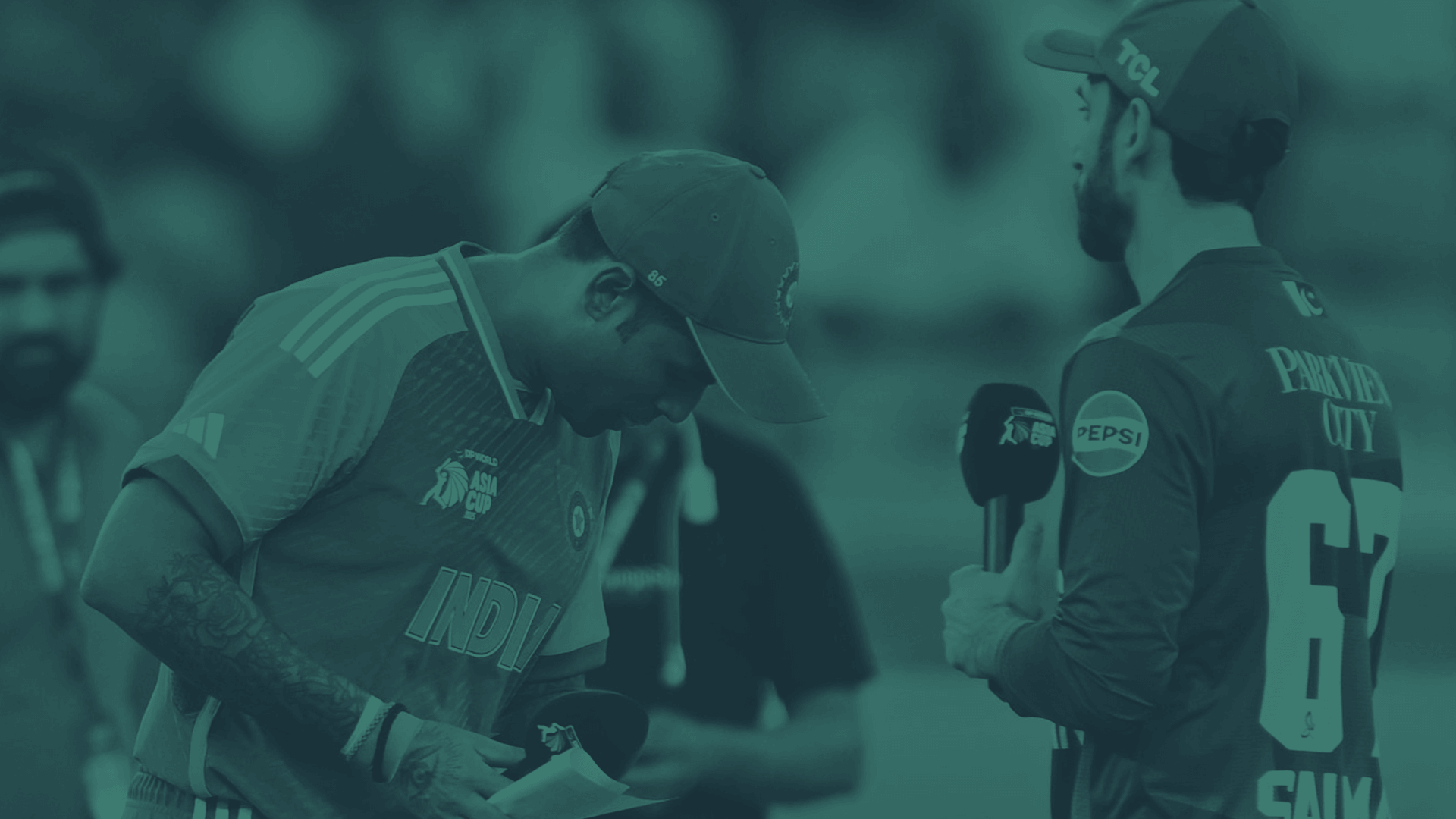
ICC’s Mixed Messages After Pakistan Boycott India Match
LAHORE: The Pakistan government today announced the Pakistan men’s cricket team will participate in the ICC Men’s T20 World Cup 2026 but will boycott the 15 February match against India in Colombo.
The Government of the Islamic Republic of Pakistan grants approval to the Pakistan Cricket Team to participate in the ICC World T20 2026, however, the Pakistan Cricket Team shall not take the field in the match scheduled on 15th February 2026 against India.
— Government of Pakistan (@GovtofPakistan) February 1, 2026
The announcement came following last week’s meeting in which the Pakistan Cricket Board (PCB) Chairman Mohsin Naqvi briefed PCB Patron and Prime Minister Shehbaz Sharif “on the ICC matter”.
Details of the meeting are unknown, but the briefing is understood to have covered recent tensions escaladed by the BCCI and ICC, including India government’s decision to not send its side to Pakistan for the ICC Champions Trophy 2025, incidents of Indian players refusing to shake hands with Pakistan players during the ACC Asia Cup, and ICC’s decision to replace Bangladesh with Scotland after refusing Bangladesh Cricket Board’s request for a change in venue due to security concerns.
India captain Suryakumar Yadav, following the first of three matches on 15 September, said: “Few things in life are ahead of sportsmanship. We stand with all the victims of the Pahalgam terror attack and we stand with their families. As I said, we dedicate this win to our brave armed forces who took part in Operation Sindoor.”
However, after the final, Yadav said: “We are aligned with the government and the Board of Control for Cricket in India.”
Furthermore, Islamabad’s decision is also being linked to questions over the International Cricket Council’s consistency in terms of dealing with matters related to teams’ safety and security.
In November 2024, the ICC had accepted the BCCI request not to travel to Pakistan for the ICC Champions Trophy and held its matches in Dubai. However, earlier this month, the ICC refused to shift Bangladesh’s matches to Sri Lanka on similar grounds and instead replaced them with Scotland.
The International Cricket Council, which had kept silent after the BCCI confirmed not sending its team to Pakistan for ICC Champions Trophy 2025, quickly reacted to teh Government of Pakistan’s post with a statement that included mixed messages.
“The ICC notes the statement that the government of Pakistan has made regarding the decision to instruct its national team to selectively participate in the ICC Men’s T20 World Cup 2026,” the ICC said, adding: “While the ICC awaits official communication from the Pakistan Cricket Board (PCB), this position of selective participation is difficult to reconcile with the fundamental premise of a global sporting event where all qualified teams are expected to compete on equal terms per the event schedule.
“ICC tournaments are built on sporting integrity, competitiveness, consistency and fairness, and selective participation undermines the spirit and sanctity of the competitions.”
Forgetting its role as well as the decision of the India government in November 2024, the ICC said: “While the ICC respects the roles of governments in matters of national policy, this decision is not in the interest of the global game or the welfare of fans worldwide, including millions in Pakistan.”
Reminding or warning of the consequences, depending on how these are interpreted, the ICC said: “The ICC hopes that the PCB will consider the significant and long-term implications for cricket in its own country as this is likely to impact the global cricket ecosystem, which it is itself a member and beneficiary of.
“The ICC’s priority remains the successful delivery of the ICC Men’s T20 World Cup which should also be the responsibility of all its members including the PCB. It expects the PCB to explore a mutually acceptable resolution, which protects the interests of all stakeholders.”
While the government’s decision is specific for the 15 February match, it is unclear what will happen if both sides reach the 8 March final. In this scenario, one thing is certain: the match will be held in Colombo as Pakistan has an agreement with the ICC under which Pakistan does not travel to India for ICC Event matches until 2027.
This is the first time Pakistan will boycott a match against India in an ICC Event. Ironically, both Pakistan and India had sent a joint cricket team to Colombo in 1996 to show solidarity with Sri Lanka Cricket, when Australia and the West Indies forfeited their ICC Cricket World Cup 1996 matches in Colombo, citing security reasons.
With Pakistan to now forfeit points against India, they will have to win matches against the Netherlands (6 February), USA (10 February) and Namibia (18 February) to earn a ticket for the Super Eight Stage.
The ICC has not responded to the PCB’s decision, but the announcement will certainly trigger significant fallout as it will have a massive impact on the revenues that are then distributed among the members.
The major loss of revenues will come from the media rights, which the ICC has sold for $3 billion until 2027. PTV and GEO Super are the ICC’s media partners for the ICC Men’s T20 World Cup 2026, who will also suffer financial losses.
Pakistan receives $35.5million annually from the ICC according to the revenue sharing model, which is fourth highest after India, Australia and England.
It is premature to predict whether the Pakistan Government’s decision will lead to a legal dispute between the ICC and the PCB, but it could have a bearing on the international cricket ecosystem. It is anticipated that the ICC will convene a Board meeting to review the situation and seek guidance for future action.
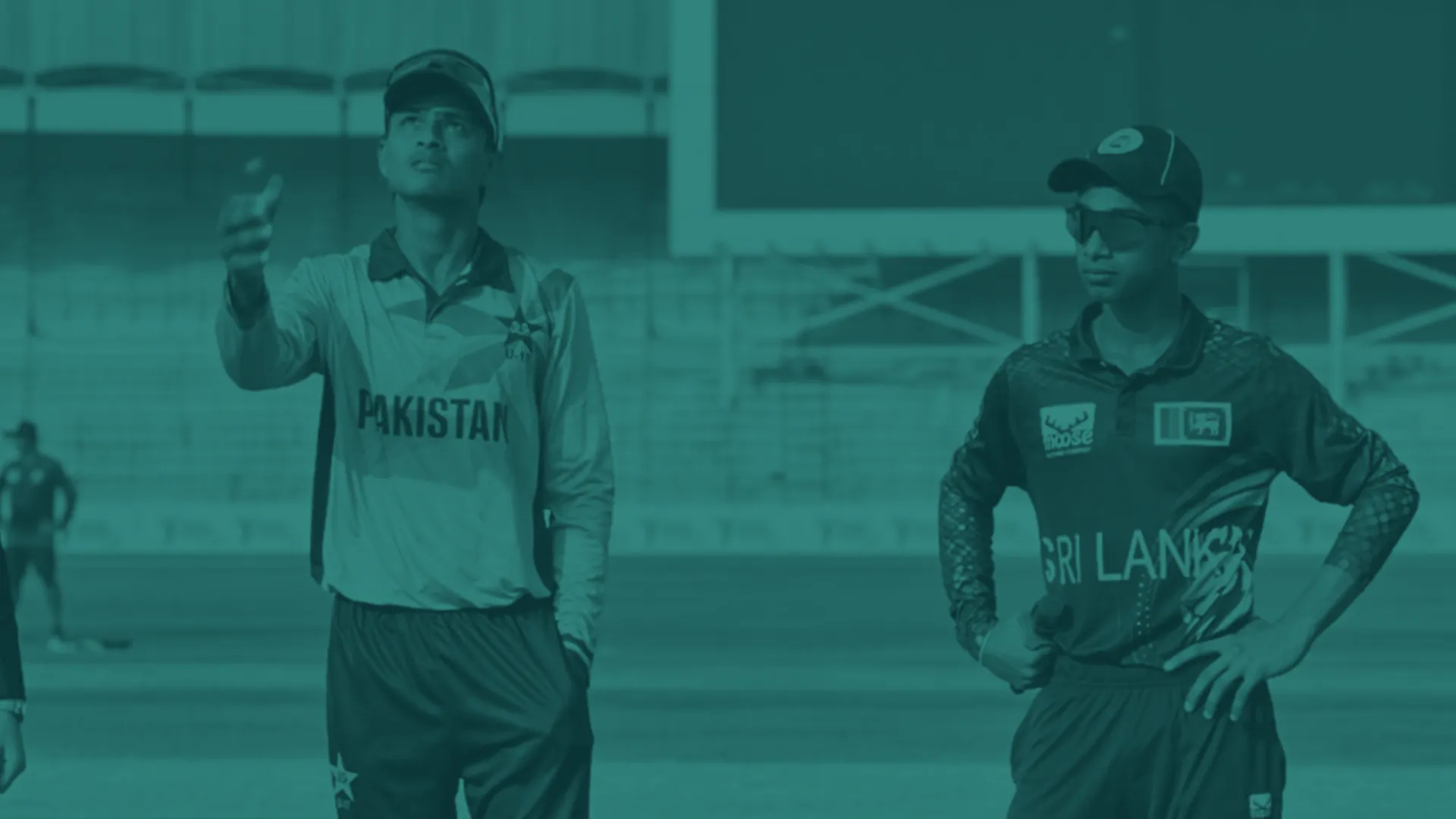
Interestingly, the Government of Pakistan’s decision came shortly before Pakistan U19 lost to India U19 by 58 runs in the ICC Men’s U19 Cricket World Cup 2026, leaving cricket pundits and analysts wondering about the timing. Some said the government should have also boycotted this match, while some opined that the government should have maintained their policy of keeping politics and sports aside.
It is unclear if Sunday’s decision is also related to yesterday’s events in Balochistan where, according to ISPR, the Pakistan security forces repulsed coordinated attacks by members of banned organisations in parts of the provincial capital and around a dozen other cities and towns across the province. Ninety-two terrorists were killed while 15 security personnel and 18 civilians also lost their lives.
Mohsin Naqvi, who is also the interior minister, told journalists: “These were not normal terrorists. India is behind these attacks. I can tell you for sure that India planned these attacks along with these terrorists.
“We will expose them to the world, the face with which they meet the world and the face with which they support terrorists.”
The Pakistan cricket team will depart for Colombo on Monday morning.

GRC Staff
Lorem ipsum dolor sit amet, conse ctetuer adipiscing elit, sed diam nonum nibhie. Aenean sollici tudin, lorem auci elit consequat ipsutis sem niuis sed odio sit amet nibh vulputate cursus.


Leave a Reply