

Drama: Sarfaraz, Gul Sacked after Lord’s Test
In an unprecedented move, the Pakistan Cricket Board on Monday sacked head coach Sarfaraz Ahmed and fast-bowling coach Umar Gul, replacing them for the third and final Test against England with the white-ball pairing of Mike Hesson and Ashley Noffke, respectively.
The decision to remove Sarfaraz and Umar, two of Pakistan’s most respected and distinguished cricketers, came after Pakistan were hammered by an innings and 103 runs at Headingley and suffered a 194-run defeat in the Lord’s Test. The third Test at Edgbaston starts on September 9.
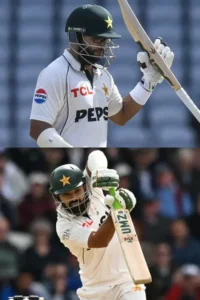
In another dramatic turn of events, Salman Ali Agha was among seven players told they would not travel to Birmingham and would instead return to Pakistan from London.
Salman captained Pakistan in the Headingley Test but was dropped for the Lord’s Test. He nevertheless made headlines at Lord’s when he produced one of the most stunning catches in the third slip to dismiss Jordan Cox. Salman is also Pakistan’s T20I captain, although Sahibzada Farhan will lead the side at this month’s Asian Games.
The other six players returning to Pakistan from London are Aamir Jamal, Ali Usman, Awais Zafar, Imam-ul-Haq, Mohammad Rizwan and Khurram Shahzad.
They will be replaced by Abdullah Fazal, an opener; Arafat Minhas, an all-rounder; Mohammad Imran Jnr, a wicketkeeper; Mohammad Imran Randhawa, an all-rounder; Razaullah, a fast bowler; Saad Baig, a wicketkeeper-batter; and Saim Ayub, an opener.
Arafat, Imran Jnr, Imran Randhawa and Razaullah are uncapped, while Saim last played a Test in Cape Town in January 2025, where he injured his ankle. Abdullah Fazal was originally selected for the West Indies and England tours but was sent home from Tarouba because of a back injury. Arafat Minhas has featured in three ODIs and four T20Is.
Awais and Aamir will leave the squad without featuring in either of the first two Tests, while Ali Usman, Rizwan and Khurram played in both the Headingley and Lord’s Tests.
Imam played at Headingley and was also named in the Lord’s XI but did not bat after suffering a calf injury. The PCB did not provide an update on the extent of Imam’s injury, leading to speculation in the media that affected the reputation of both the player and the institution.
The treatment of Sarfaraz, an ICC Under-19 World Cup and ICC Champions Trophy-winning captain, and Gul, two of Pakistan’s most distinguished cricketers, is likely to attract considerable scrutiny. Players have been sent home on disciplinary grounds throughout cricket history, but the mid-tour sacking of both a head coach and a bowling coach is an extraordinary and highly unusual development in international cricket.
Sarfaraz was appointed in May for the Bangladesh tour, although the PCB never confirmed the duration of his assignment.
Jason Gillespie was the last Pakistan red-ball coach to be appointed through an advertised process. Aqib Javed, Azhar Mahmood — promoted from bowling coach to head coach to complete his two-year contract — and Sarfaraz were all interim appointments.
The PCB’s decision to sack two members of the coaching staff and send seven players home ahead of the final Test is likely to attract further attention from the England media, which had already subjected Pakistan to considerable scrutiny before the Headingley Test.
The decision to replace seven players also gives fresh weight to The Telegraph’s assessment that this was the weakest Pakistan side to tour England in 50 years.
While the PCB has effectively shifted responsibility for Pakistan’s poor performances at Headingley and Lord’s on to the players and coaching staff, those responsible for assembling and managing the campaign remain in their positions.
The selectors have now made seven changes to the squad they originally selected for England, while the cricket managers who assigned responsibilities to Sarfaraz and Gul continue in their roles.
Most of the decision-makers are in London attending a Pakistan Super League meeting, reinforcing the perception that accountability in Pakistan cricket begins and ends with the players, while those equally responsible for major decisions continue to enjoy the perks and privileges of their positions.
Pakistan’s players must answer for their performances. But the defeats at Headingley and Lord’s, followed by the dramatic changes ahead of the third Test, also demand scrutiny of those who planned the tour, selected the squad, appointed the coaches and created the environment in which the team was expected to perform.

GRC Staff
Lorem ipsum dolor sit amet, conse ctetuer adipiscing elit, sed diam nonum nibhie. Aenean sollici tudin, lorem auci elit consequat ipsutis sem niuis sed odio sit amet nibh vulputate cursus.


Leave a Reply